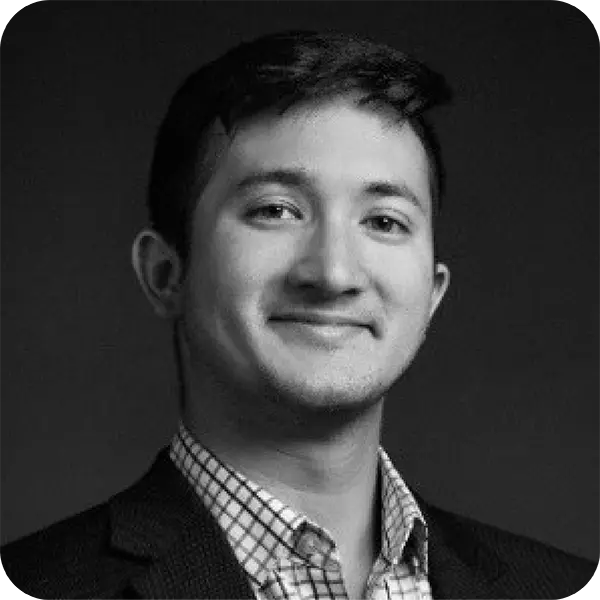
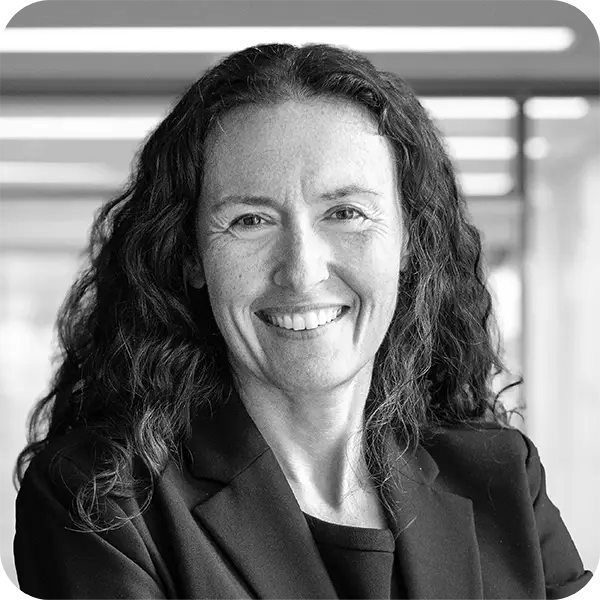
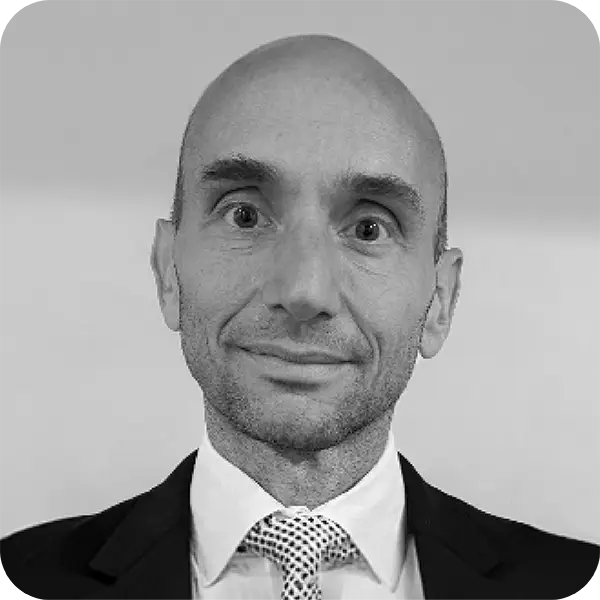
Hi everyone, and thank you for joining us today. Here at Norstella, we’re going to be hosting a conversation around how real-world data is rewriting the clinical and commercial rule book. Let’s take a bit of creative license for that title though. Of course, there is no single rule book for developing and launching new therapies, but we would contend that certainly best practice is rapidly changing as the tones available to us evolve. And that’s the crux of the conversation that we’re going to be having today. So my name is Daniel Chancellor. I’m VP of thought leadership at Norstella. I’m moderating today. I’m delighted to be joined by a great group of speakers and panelists. Firstly, we have Nolan Hsu, a friend of ours through the Brain Cancer Research Alliance, an organization he co-founded back in 2022, and also a director at Bikira Therapeutics. Joining Nolan, we have Suzanne Caruso, general manager for clinical regulatory and strategic intelligence at North Stella, and she spearheads the development of products that support decision making at that clinical to commercial interface.
And lastly, we have Lance Wolkenbrod, vice president of Real-World Data, who brings his sharp focus to support clients to maximize the reach and real world impact of their therapies. Welcome to you all.
Thank you. Thank you very much.
Now, those of you listening may know Norstella to be a leader in the real-world dataspace. We certainly are pioneering its use in biopharma decision making through NorstellaLinQ. This is our real-world data and AI engine, which powers our product developments and advisory services. If you’d like to know more about this, then please do take a look at our websites and get in touch with us and I’ll put in our contact details at the end and we would love to embed this within the rule books that you are building at your organizations. And so onto the discussion. We plan to run for around 30 minutes today and we’re going to be recording. So please look out for a copy of this if you want to rewind, rewatch or run your own AI assistance over it. But without further ado, let’s turn over to our speakers.
So Nolan, I’d like to start with you. This builds on past conversations that we’ve had, but we know that patients can feel lost or invisible in the healthcare system and that’s something that we are trying to solve through real world data. But please, could you share, I suppose, from some of those past conversations to our audience a bit about your story and the gaps that you may have experienced?
Yeah, absolutely. And thank you for having me today. So I was diagnosed in 2021 with an ododendroglioma, which is a low-grade glioma and a type of brain cancer. It’s usually located near the Wernicke area, which manages speech development. So the way that I discovered my tumor is that I would have multiple songs playing in my head over and over and just overlapping. And originally a PTSD was the diagnosis from my doctor, but that didn’t really fit what I was feeling. So I went in, I got an MRI and what was actually happening is I was having auditory seizures. So it was misfiring in the part of my brain that wernicky area and exhibiting itself as music.
So after discovery, I had an awake craniotomy. It was I think nine hours long and the biopsy came back that I hadn’t an LGG and I had an IDH2 mutation and an IDH2 mutation within brain cancer and LGG is there’s about 2,500 of us. So not 25,000, not 250. We’re talking about a very small population. So after the surgery, my family and I began doing research and what we found is what led to us to founding the Brain Cancer Research Alliance. And that is that there has not been a novel curative solution since the ’70s or at that time. So that’s 50 years in an absurd amount of time we’re talking about the start of the first personal computer like the Apple one to now what we have in OpenAI. So development from computers versus health tech. And now we do have some progression inhibitors, but we still don’t have curative solutions.
Standard of care is still chemotherapy and radiation.
Sure. Thanks. Well, thank you for sharing that story. Every time I hear it, it’s just fascinating to hear. And perhaps we could dive a little bit more into, I guess, some aspects of the care that you experienced and perhaps the speed, or I don’t want to put words in your mouth, but how fast things were able to move for your own individual case and how your data was used to inform your treatment decisions.
Like I said, I received pretty much standard of care. There wasn’t really anything new. I mean, I got a craniotomy about a month after discovery, which is thankfully faster than standard surgeries there. And then I was given that wait and see output, which was, we think we had a full resection, let’s just see what happens. And I think my data helped a little bit in that I had an IDH2 where I was allowed to have an N of one with that inhibitor drug from Servier. It unfortunately didn’t take. So after a year of being on that inhibitor, I had to go through proton radiation and then chemotherapy. So I’m not sure if my number changed too much on it, but yeah.
Okay. Suzanne, let’s turn that over to you. I mean, Nolan’s spoken about how his particular condition was, well, he’s been involved in an NF1 trial and the very few patients with his particular type of mutation, 2,500. Running clinical trials in these types of populations can be incredibly difficult, but how is it through your experiences and your products that you can actually bring real-world data to bear to actually help evidence generation when the sample sizes are so small? Yeah,
It’s a great question. Thank you for the invite today. I’m excited about this topic. It’s interesting because in rare disease versus diseases that have a larger patient population, real-world data really affects how you can find these patients very differently. And in rare disease, one of the biggest challenges is that one particular physician might have on patient every few years. So knowing where those patients are is critical for those sponsors and pharmaceutical companies to be able to go and try to see if that healthcare physician actually wants to either become an investigator or is an investigator to be able to offer that kind of study to that particular patient. And our real-world data, RWD, as I’ll call it, allows us to say, yes, there is a patient population. It might be five people in all of Chicago and they typically are working with this particular hospital.
We think Novartis, it’s really important that you go into this hospital and stand up a research site if you want to be able to actually do research in this indication because in rare disease, it’s not always the case that someone might be able to travel, that someone might be able to go and go halfway across the world to be able to get treatment. Some rare diseases, that’s acceptable. Some it’s actually not going to work out. So understanding the landscape of where these patients are is really critical. And then for larger diseases with the larger patient population, the approach might be very different. It isn’t that there aren’t going to be patients. It’s where are you going to find the most number of patients where the investigators are in order to try to see if you can speed up that trial by offering that study to more people.
And you do that by looking in the lab data and the EMR data and the medical claims data to make sure you’re reaching out to investigators that have that patient population and have the time to be able to do that research. So the approach might be different, but still that use of RWD is critical in what approach you’re going
To take. Yeah, sure. And tying some of what you’re saying there with what Nolan’s spoken about his treatment history and progression, what kind of information within a patient journey might be informative when it comes to designing clinical trial?
Yeah. One of the things that’s been most interesting, and I’ve had a number of conversations about recently, is what happens right before that patient is diagnosed and what happens right after that patient is diagnosed. Knowing what happens and what patterns that patient is trying to exhibit is actually really critical. I’m sure if we ask Nolan, tell me your journey. You first went in and you spoke to this particular kind of physician and then it went to this physician and then you got referred to another physician. Understanding that patient journey is really critical for those pharmaceutical companies who are doing research to know which type of physician they need to interact with to maximize the opportunity for those patients to be offered a trial. And then what happens immediately after? As Nolan said, I mean he was in surgery a month after diagnosis. That is very fast, that is actually very, very quick.
Imagine that you’re a pharmaceutical company, you have a new study and you only have a month window to find the investigator, get in front of that patient, have that patient consider whether or not they want to be on a research study. That is very, very hard to scale. That point in time is very, very important to know and real-world data allows you to get some insight into that in advance of patients coming in so you can plan for that timeframe. So that’s one of the things that I think is most critical.
Yeah, sure. And certainly Nolan being in the industry, you know a little bit of how the mechanisms work, so I’m sure you’re able to empower your own treatment journey to a points, but I’d be curious to know how spread out your treatment history and physician history and your data records might be on how many different specialists and institutions did you visit across your journey?
Yes, I am very lucky to be in industry and being in Boston. So availability of physicians and experts is definitely something I’m very thankful for. I think, let’s see, I was diagnosed in Brigham and then I talked to Dana Pharma and then to MGH as well, and I met with three of the top neuro-onc folks and the big question that we had was, well, if you were to go through brain cancer surgery right now, who would you choose? And we actually only had one selection because all of them said, well, this woman has a wizards touch. She is able to get within your brain and remove everything. So the start of my journey, maybe four or five physicians saw myself my stats, but afterwards for radiation chemotherapy, which was two years ago, I went with a progression or no progression for three years. I was suggested to a number of places, but I went back.
Dana was my original, then I went to MGH, and then to get blood draws, I was talking about places in New Jersey and outside of MGH. So my data is definitely all over the place as I think what we’re talking about right now
Yeah, certainly a circuitous data history there. Lance, I’d like to bring you in now and apologies for keeping you so quiet for so long. Let’s talk a bit more about evidence generation and how are you using RWD to guide other evidence generation or regulatory decisions in particular for rare diseases?
Yeah, no, thank you for having me. And really it’s I think historically what we used to look at is just literature review for evidence. And so what we would do is find a clinical paper and that would be our evidence there. But what’s hard about that, that’s a very specific use case right there. They had their objectives, the study already designed and they wanted the outcomes and report that. And especially in Nolan’s case right here where he was at N of 2,500 right there. So the way that we’re actually using real-world data is also to look at lookalike populations there, really to find evidence right there. So what were the patient’s early signs and symptoms? And I think what Susanne said was extremely important is what were those events that led up to that diagnosis right there? So how can we change outcomes from an early diagnosis or people that had later diagnoses and disease progression right there?
We really want to find out when is that inflection point into when a patient moves from stage A to stage B right there. And so when you’re looking at creating new products or doing more research there and looking at outcomes, it’s also being able to stage the patient. So the more data that we can have, the more richness that we can get at, what is the change in that patient population, especially when it comes to biomarker testing and stuff like that. That’s something that’s when we think about maybe 15 years ago or 20 years ago when Herceptin or HER2 was commonly, or just started getting tested in brain cancer, or excuse me, in breast cancer. Now there’s so many new tests and panels are going out that really helps us stratify patient populations to not only understand what the tumor is, but what’s the prognostic indicator there?
I think that that just gives us richer insights about what we can get from our real-world data analysis.
Sure. And if we think beyond that, staying with you, Lance, we think beyond that research setting and actually if we imagine the scenario whereby a biopharma company has actually successfully got through the various clinical gates and got approval, what are the factors, more I guess commercial or market-driven factors which then might inform back some of these decisions around finding patients running clinical trials and your experience?
Yeah. I mean, I think one of the things that we can speak to right now is the actual biomarker testing. So if you have a potential targeted therapy or you have complimentary or all comers types of therapy right there, it’s understanding how often is that are patients being tested right there? So in Nolan’s case right there, they initially thought that maybe it was PTSD. So did they go that other separate there? So one of the things when it comes to a commercialization, although you may have a product that shows a benefit there, are you able to identify patients right there? So a lot of times that the manufacturer will understand is, is the current testing actually going on today? And if not, when we do commercialize it given asset, is it going to be sponsored testing? Meaning is the manufacturer going to work with a clinic or a lab to actually pay for the testing for these given patients there?
So that’s going to be one of the more crucial parts. So it helps advocate for early testing. And then with that bit of information right there, real-world data helps them engage with potentially in this case oncologist or the treaters right there to advocate for certain testing. So how do you get your MSLs in the field to actually start to do the education and parallel when you do commercialize? So once the product does become available, there is a high level of awareness right there to not only identify the patients, but potentially to get them treated faster.
Absolutely. Yeah. I mean, Lodi might be able to talk a bit more about this from an informed point of view, but the IDH2 mutation, how was that tested for and how commonplace is that in treatment practice and is this something that you think is becoming more prevalent or will become more prevalent?
Yeah, I think it is at least as Dana-Farber, it is standard at this point to identify what the mutation is. I think there are two different assays, one that has been improved by insurance and one that is more of a private, but I think it is a standard operation for care for brain cancer.
Okay. We’re talking a little bit more about real-world data factoring into some of these decisions when it comes to how to find patients or how to run a clinical trial. How are we layering on artificial intelligence with that real-world data? Suzanne, if I can come to you first, how is AI supporting RWD in decision-making?
Yeah. First, RWD dataset is massive. So the idea of this manual curation, it’s impossible to do. So we have to layer in AI to be able to help curate the right datasets in the right structure so that we can ascertain some insights from it. One of the biggest use cases that we’re hearing now and we use as well as natural language processing of unstructured data. And just for everyone that’s not super familiar with RWD, there’s structured data. So think about data going into your MyChart. It’s in a particular field, it reads a specific way and it has a column name and that field is named. There’s also unstructured data, like unstructured notes where your physician has a lot of notes that they take about you during that its particular time in his office. And that can be while she’s speaking with you, she’s taking notes into her dictation already or afterwards and all of that is living in paragraphs.
In order for us to be able to utilize the longitudinality of all of your patient experiences across those many different sites that we were talking about, we need to be able to tie that together and that unstructured data needs to be organized and associated with that structured data. That is where AI is playing a big, big role. And then on top of that, it’s just gathering those insights on top of massive data sets. We’ll be looking, and Lance, you know this very well. We’ll be looking at one particular patient, one de- identified patient that has breast cancer might have up to 450 different records across many different institutions that have to be associated. There’s no one human who is going to be able to go through all of those records, understand that patient journey and be able to pull things out. And if they did, they’re spending days on that particular patient AI can do that very quickly for us and bring those insights up.
And then we can spend time as the experts looking at that and know when to dive in and ask particular questions of particular components of that record. That’s one way that AI is being used. So it’s being used pretty much across the board now in really digesting RWD for us.
Sure. Lance, anything you’d like to bring into that in terms of how you are finding AI has been able to help you help our clients more?
Yeah, I mean, I would say I’ve been in this space for, I don’t know, 25 years right now. And I would say that if we looked at what we did before, what we did do today. I mean, as Susan said, the data’s richer and stuff like that, but I think my prior work was the 80 / 20 rule. 80% of my time was mining data and you’re spending that and spending that and you make one minor mistake in your calculation and your equation and then you get to the end of your analysis, you have to redo it. So you lose a lot of time, but there’s a lot of things you just don’t think about and that’s the common thing. So I always think about the difference between reading a map and having ways. Reading a map is like, if there’s a roadblock, I’m lost.
I have to go all the way back and start all over. But with ways, it’ll tell you how to change and give you other options right there. And that’s what it is today. Right now, I’d say 15 to 20% of our time is just thinking about the queries that we’re going to run, how we’re going to pull data. It’s actually we’re getting all this bit of information that we’re actually putting more into action. So there’s a lot more value we could get within the data. It’s a lot more timely, but it’s also providing us things that we haven’t even thought about before. And it’s interesting, once you start to look at that, you can start to see actual patterns right there and certain things that may get evolved right there. So you can run similar … Even patient populations in the EMR notes that they may not have that proper ICD-10 code.
So as Susan said, it’s in a structured field, but there’s much more information where the physician is having questions about the patient. So maybe if they were having issues right there and there were certain things that allowed that physician then to define what that patient actually had, it’s like, what were the actual steps for that physician to get from point A to point B? And that’s a lot of things that we can get more insightful now with not only the level of data, but how AI helps us extract those key nuggets of information to make more of a defined level of insight.
Okay. So we’ve spoken about this from, I suppose, how we’re able to improve in terms of what we do. What’s this mean in terms of translating to decision-making for our clients and ultimately for patient outcomes? Perhaps we might want to take a now view and maybe in a fear’s time. Yes, Lance, if I can stay with you, how is this really impacting on the work that the industry is doing to benefit patients? Yeah.
I mean, I think first and foremost, it really helps manufacturers really find the unmet need, really is to really understand how are diseases progressing? What are some of the unmet need? And if we’re going to develop a product, where should we really focus in on? And that’s kind of the now stage. In five to 10 years, I still think we’re doing more personalized medicine right there. So maybe there’s going to be therapies that are more tailored for the individual because we’re going to have more and more data points on that. So how can we get more specific to ensure that we’re getting the right treatment for that patient? So we can do projections on what the outcomes will be if you go down with this treatment or that given treatment there. So I think that overall survival rates will just definitely increase because we’re going to have a more focus of how do disease progress on certain patients and I think that benefits longevity of patients overall.
Thank you. Suzanne, anything you’d like to come in on?
Yeah, I think on the clinical trial side, I see two big changes coming. One is that we’re going to be able to use an RWD for synthetic arms. And what this means is that when you think about a phase three, you typically have a placebo group and you have a group that gets drug. It may be possible and it will be possible to be able to run that placebo group using our RWD data asset without having to bring in patients to be able to have to take a placebo drug. Very practically, what that means is we’ll know whether or not that drug works a lot faster because you have to enroll fewer patients. Huge win for the industry, being able to save time on getting to determine does the drug work or not, does it move to the next phase or not? So I think that’s one component.
And then the other thing is I think it’s going to be access to clinical trials. I hope that the visibility into what patients actually would qualify will expand in HCPs and the physicians that have patients that might qualify for research being given that opportunity. So I think it’s kind of twofold. So those are the two things that I see.
How does this resonate with you, I suppose, based on your own individual experiences and also through the work that you’re trying to do with the Brain Cancer Research Alliance?
Yeah, so I thought that I was a special cancer case, but a friend of ours actually reached out and was diagnosed with a brain cancer that there has only been 84 cases ever. And so in those scenarios, what do we do? Ah, bad luck, buddy. See you later. It’s no, I mean, this development gives more options, gives more information as Lance and Suzanne was talking about. Being able to sort through data and find potential therapies, it’s groundbreaking and it gives a lot of hope to patients and caregivers and family and loved ones. So I am just watching and hoping that not only does it give more options, it speeds up our new therapies and treatments.
Sure. No, very good. And any last words from you in terms of what your hopes are for the Brain Cancer Research Alliance now that you have an audience listening to you, any plugs you want to make?
Our goal is to have a novel curative solution in five years. We started as 10, five years have passed. So that’s what our hope is. RWD improves that. It helps us and the industries and the academics from improving opportunities.
Okay, great. Well, thank you everyone for your time. I’m just going to bring up a page with our contact details on for any further information if you’d like to get in touch. But yeah, thank you very much to firstly, Nolan, to Suzanne, to Lance for your time and insights today in sharing what your perspectives are and how real world data is rewriting the clinical and commercial rule books. Thank you for you and the audience. We appreciate your time today. If you’d like to find out any more information about Norstella and NorstellaLinQ, which is our real world data asset, please get in touch with us either through the website or the contact information shared here. We have been recording this session. This will be in your inbox in due course, but thank you very much for your time again and we hope to see you soon.